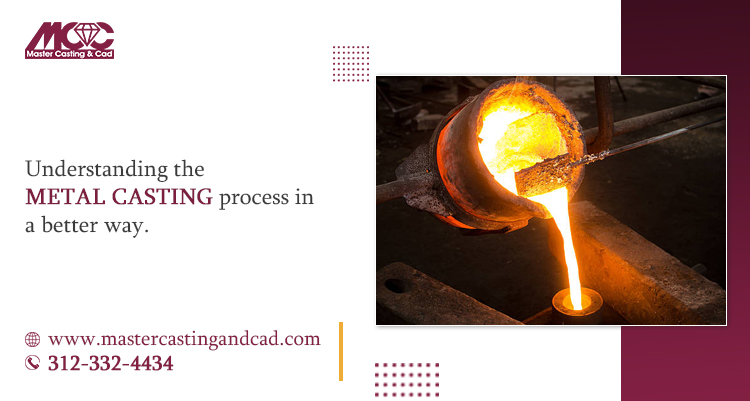
Metal casting is basically what the name suggests. It is the process of melting down metal into a liquid state. The liquid metal is later poured into a cast and this cast allows the metal to cool down, thus creating the desired result of the intended mould or particular item they plan to make out of the metal. The finished product is sent off to be polished up and is ready for distribution.
The metal casting process is utilized for more “tailor-made” areas of manufacturing metal products that would generally cost a whole lot more if they were to be machine welded. A fine aspect of metal casting is that it has the potential to re-create a similar product with great ease and also, the products will be identical to one another.
Master Casting and Cad is a leading name when it comes to jewelry casting. They offer the best jewelry casting services in Chicago.
Let’s understand the metal casting process in a deep way
The most integral part of metal casting is the mould. It is essentially what the product will be. These moulds are built in a foundry. Manufacturers take their sketches, dimensions, and ideas for the mould to the foundry, where the moulds are constructed. These moulds are then sent off to the casters. They are put into a backup frame that has the cooling apparatus.
The melting down of the metal occurs in a very specific place in the foundry. When the mould is done and can be cast, casters move the liquefied metal over huge machines and equipment above the mould. This particular equipment helps the liquefied metal flow down into the cast. Such an equipment also keeps a check at the rate at which the liquid metal flows down into the cast.
The cooling equipment later cools the metal down and allow the metal to harden and gather a solid-state. The castings are finally removed and the product can now be cleaned. This extremely tough process is thus best left at the hands of experts who offer fine casting in Chicago.
Problems that occur in the metal casting process
Pollution is a serious problem today. In terms of metal casting, they also adversely affect the metal. If the metal, in a liquid state, is exposed to forms of pollution, this will lead to imperfections within the metal itself. Thus, when the metal is solidified it can create weak spots and when the cast is separated from the mould, the cast can break.
 Master Casting & Cad